
Tile selection is the single most consequential decision in a bathroom renovation. It dictates maintenance, hygiene, thermal feel underfoot, acoustic performance, and — of course — the look of the room for the next decade. Here’s how we guide clients through the material, size, and finish decisions that make or break a project.
Material: Porcelain, Ceramic, or Natural Stone?
For 90% of bathroom floors we specify rectified porcelain. It’s dense, near-zero porosity, dimensionally stable, and available in large formats that minimise grout lines. Ceramic is fine for walls and splashbacks but isn’t hard enough for floors in a high-traffic wet area.
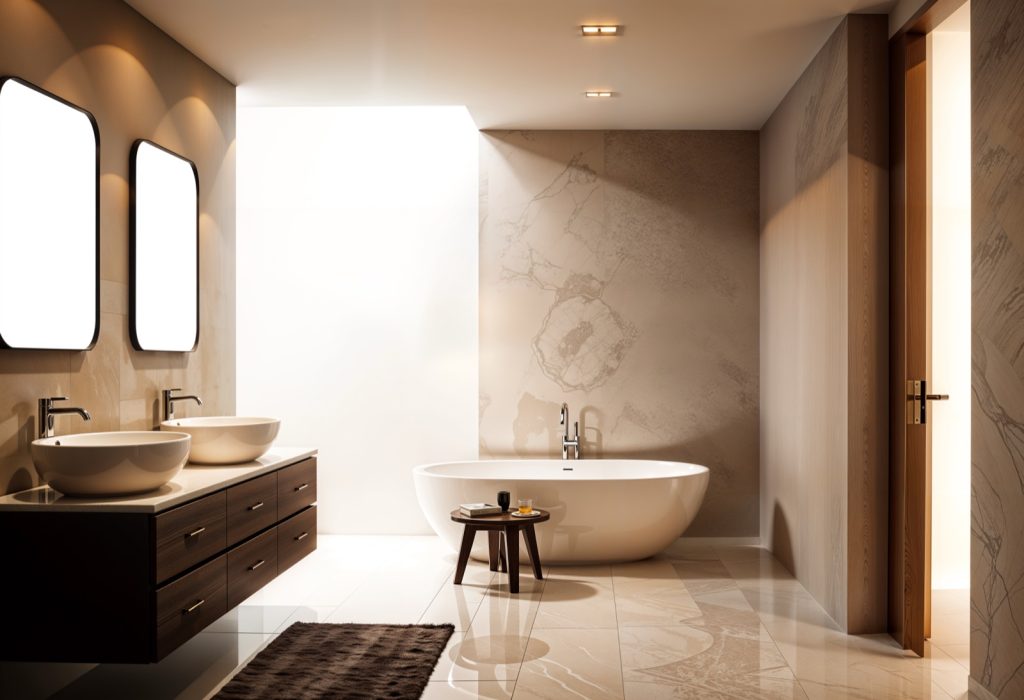
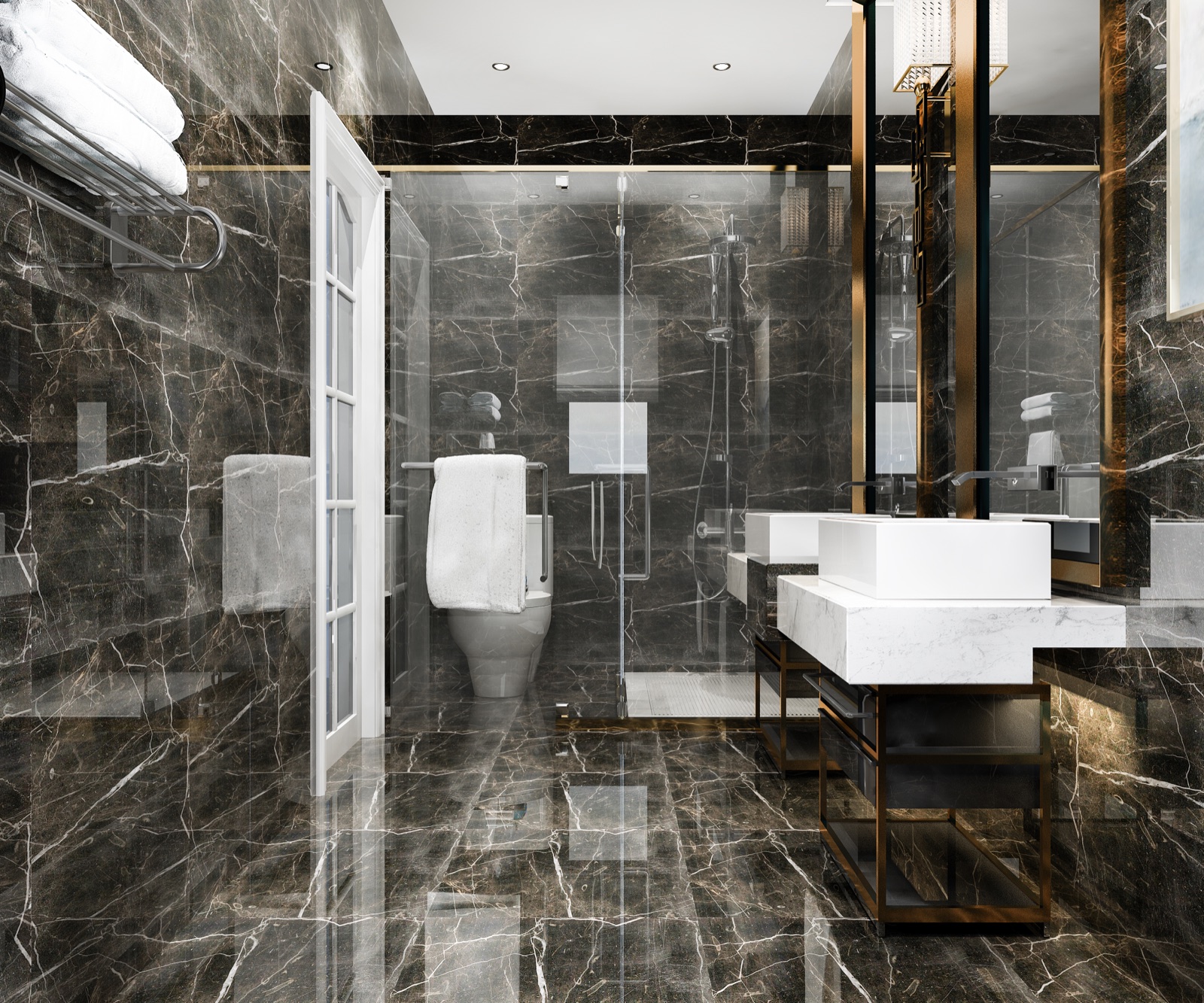
Natural stone — marble, travertine, limestone — is stunning but demands maintenance. Stone needs sealing on install, re-sealing every 18 months, and pH-neutral cleaning products (nothing acidic). If the client is enthusiastic about upkeep and understands the trade-off, stone is beautiful. If they’re specifying for a rental or a busy family, we steer them back to porcelain.
Format and Grout Lines
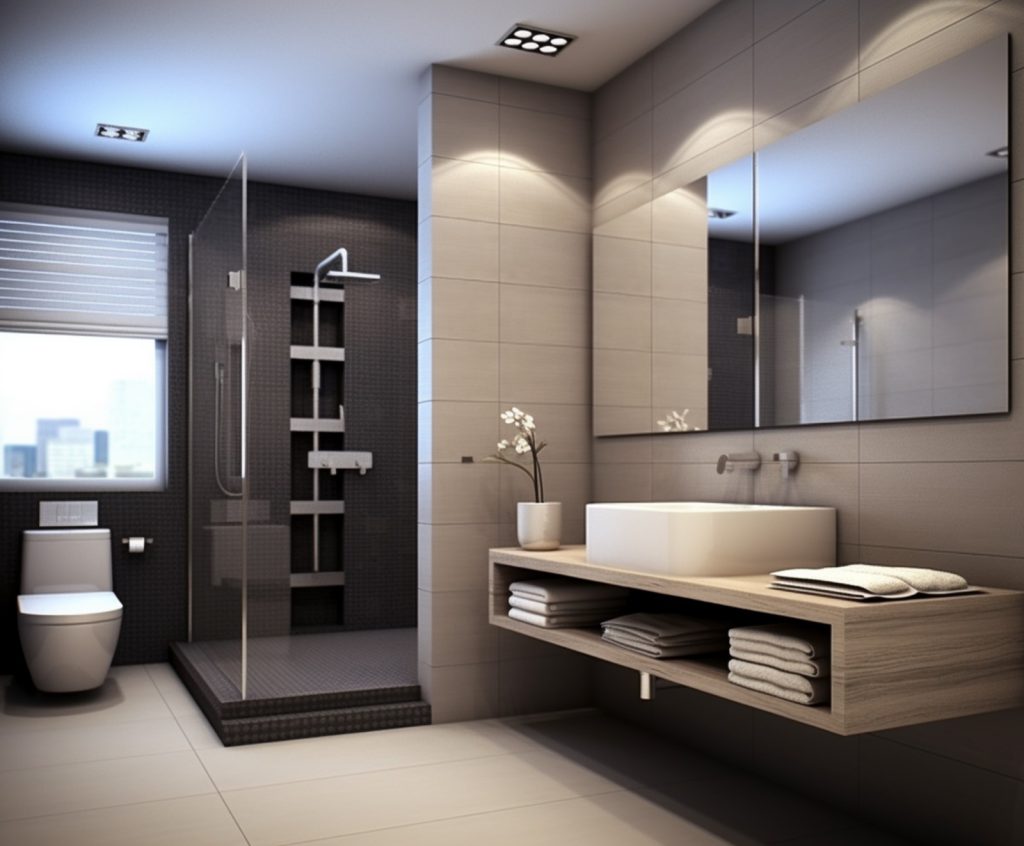
Large-format tiles (600 × 1200, 800 × 800) have transformed bathroom design. Fewer grout lines mean less visual noise, less maintenance, and a cleaner read. The trade-off is substrate preparation — anything over 300 × 300 needs a level substrate within 3 mm across 2 m, which usually means a levelling screed before we start.
Grout Colour
Match the grout to the dominant tile tone, not to white. A mid-grey or warm-putty grout hides marks and makes the tile look more expensive. Bright white grout is a maintenance nightmare and looks cheap after six months of shampoo splashes.
Finish: Matt, Satin, or Polished?
On bathroom floors, always matt or satin — never polished. Polished tiles turn into ice rinks the moment they’re wet. Matt porcelain with an R10+ slip rating is our floor default; satin finishes work beautifully on walls, where grip isn’t the concern.
Sizing the Room
A classic mistake is specifying a tile that’s too large for the space. A 1200 × 600 tile in a 2 × 2 m bathroom means you’ll see four or five tiles — the eye reads it as out of scale. We usually recommend tiles that give you at least 6–8 full pieces across the floor.
Our Shortlisting Process
When a client brings us a bathroom renovation brief, we start with three shortlisted tile options that hit the aesthetic, budget, and maintenance targets. We order samples, tile them into a mock-up, and review in the actual room’s light. Only then do we commit to the specification.
This one-week shortlist phase has saved dozens of projects from expensive regret. It’s included in every quote.