
How to achieve the seamless tiled bathroom dominating UK renovation projects this year, and the one mistake that undermines it every time.
There is a moment on every bathroom renovation where the tiles go up and the room transforms. The floor disappears. The walls extend. The shower becomes part of the room rather than a box within it. For a few hours, before the accessories go on, the bathroom looks exactly like the bathroom you imagined when you started the project.
Then the flush plate goes on. Then the towel rail. Then the toilet roll holder, the brush housing, and the extractor grille. And the moment is over.
Tile drenching is the design movement that refuses to let that moment end. And in 2026, it has become the defining approach to bathroom design across the UK.
For the bigger picture on why concealed accessories matter alongside tile drenching, read The End of the Cluttered Bathroom.
What Tile Drenching Actually Is
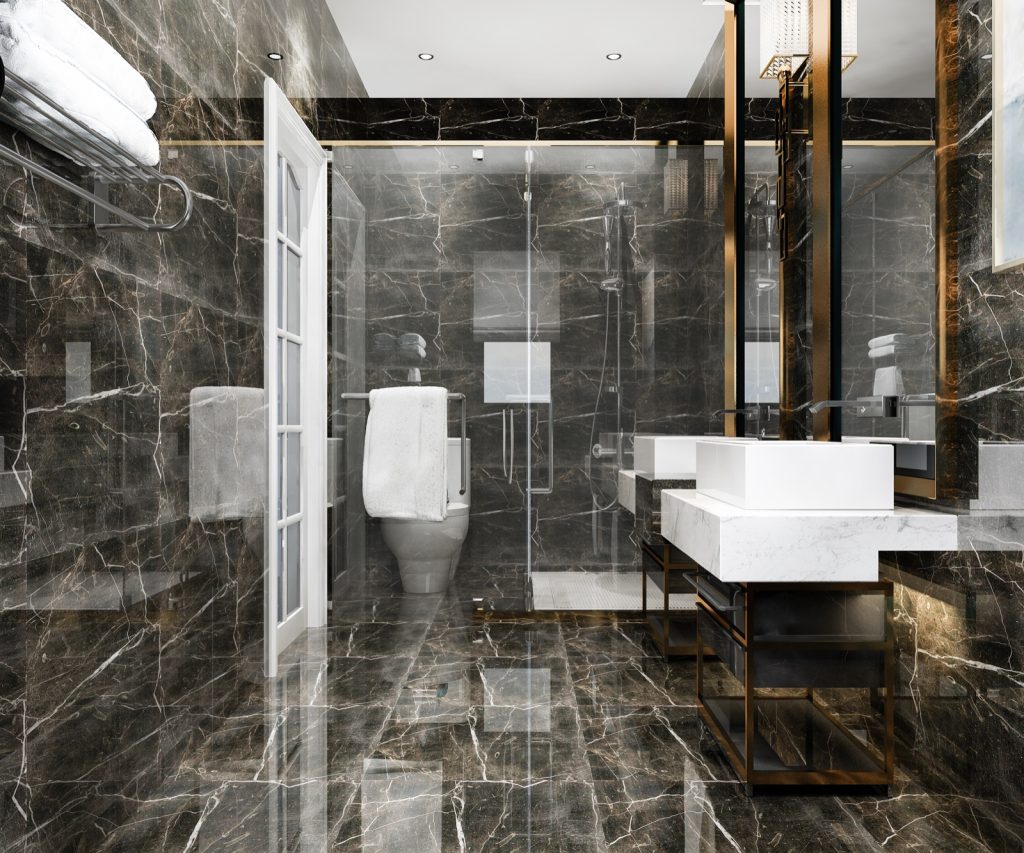
Tile drenching means using the same tile across every surface in a bathroom — walls, floor, ceiling, and shower — without variation, without borders, and without transitions between areas. The tile runs from the floor upward, across the walls, into the shower enclosure, and sometimes across the ceiling, in one unbroken application.
The result is a room that feels significantly larger than its physical dimensions suggest. When there is no visual boundary between the floor and the wall, the eye cannot find a stopping point and the space reads as continuous. The bathroom becomes one thing rather than several things arranged next to each other.
Tile drenching removes borders, trims, and transitions entirely. One material. One surface. One room.
Why It Is Everywhere Right Now
The timing of the tile drenching movement is not accidental. Walk through any London bathroom showroom right now and the shift is visible. The tile samples drawing the most attention are the largest formats. The bathroom displays that stop people are the ones where a single material runs from the floor to the ceiling without breaking.
Two things have made this possible at scale. The first is the rise of large format tiles: 120x60cm, 120x120cm, and beyond. Larger tiles mean fewer grout lines per square metre, which means the surface already reads as more continuous before the tile drenching principle is even applied.
The second is the shift in how people think about the bathroom itself. Homeowners designing a bathroom in 2026 are designing a space for daily ritual. The visual calm that a continuous tiled surface provides is not a luxury preference. It is a design requirement.
How to Execute Tile Drenching Correctly
Gero Marceno, co-founder of Tile In Progress and one of London’s most experienced bathroom tilers, has completed tile drenched installations across hundreds of London bathrooms. Here is the practical guidance.
Plan the layout before a single tile is cut
The most common mistake in a tile drench project is starting without a full layout drawing. With the same tile covering every surface, every cut and every joint decision is visible across the entire room. Map the tile layout on paper first and decide where cuts fall.
Match your grout colour to your tile
The grout line is the enemy of the seamless surface. Choose a grout colour that matches the tile background as closely as possible. On a warm white marble tile, use a warm white grout, not a grey one.
Use a large format tile wherever the wall depth allows
The fewer grout lines per square metre, the more seamless the result. Large format tiles require more precise installation: the wall substrate must be perfectly flat and the adhesive bed must be even across the full back of every tile.
Take the tile into the shower without a change
The most common point where tile drenching breaks down is at the shower threshold. The tile should run directly from the bathroom floor into the shower floor and from the bathroom wall into the shower wall without any transition.
Specify your accessories before the tile goes on
This is the single most important piece of advice for any tile drench project. Every accessory that needs to be built into the wall — flush buttons, extractor fan covers, towel hooks, toilet paper holders — must be specified and positioned before tiling begins.
Get a quote for your tile drenched bathroom
The One Thing That Breaks the Effect
A chrome flush plate on a marble wall is not a small detail. It is a rectangular object in a different material, a different colour, and a different finish sitting on a surface that was designed to be uniform. It draws the eye immediately because it is the only thing that breaks the surface.
The same applies to every conventional bathroom accessory: the toilet roll holder on its chrome arm, the brush housing on the floor, the towel rail spanning the wall, and the extractor grille near the ceiling. Each one solves a real problem. Each one also compromises the tile drench effect that took significant time, skill, and budget to achieve.
The Complete Answer
The product that changes this is not a bespoke commission or a custom build. It is a complete collection of tile-integrated accessories that installs during the tiling stage and disappears into the wall permanently. That is INTEGRA Prima.
Prima FLUX replaces the flush plate entirely. The mechanism lives within the wall behind the tile and the flush operates with a push on the tile face. Above the toilet, the tile continues uninterrupted.
Prima VENTUS addresses the extractor grille, one of the most visible interruptions in any tile drenched shower or bathroom. The fan unit sits behind a flush tile-faced cover with full airflow maintained through a precision gap at the perimeter.
Prima ACCESSUS solves the service point problem that most tile drench specifications ignore until it is too late. The wall remains visually complete while service access remains possible.
The full collection also includes concealed versions of the towel hook, toilet paper holder, toilet brush holder, and waste bin — covering every object that would otherwise sit on the surface of a tile drenched wall.
Browse the full INTEGRA Prima Collection
Which Tiles Work Best for Tile Drenching
Large format porcelain is the most practical choice for the majority of UK bathrooms. It offers fewer grout lines, consistent colour and texture, and a wide range of finishes from matt to polished.
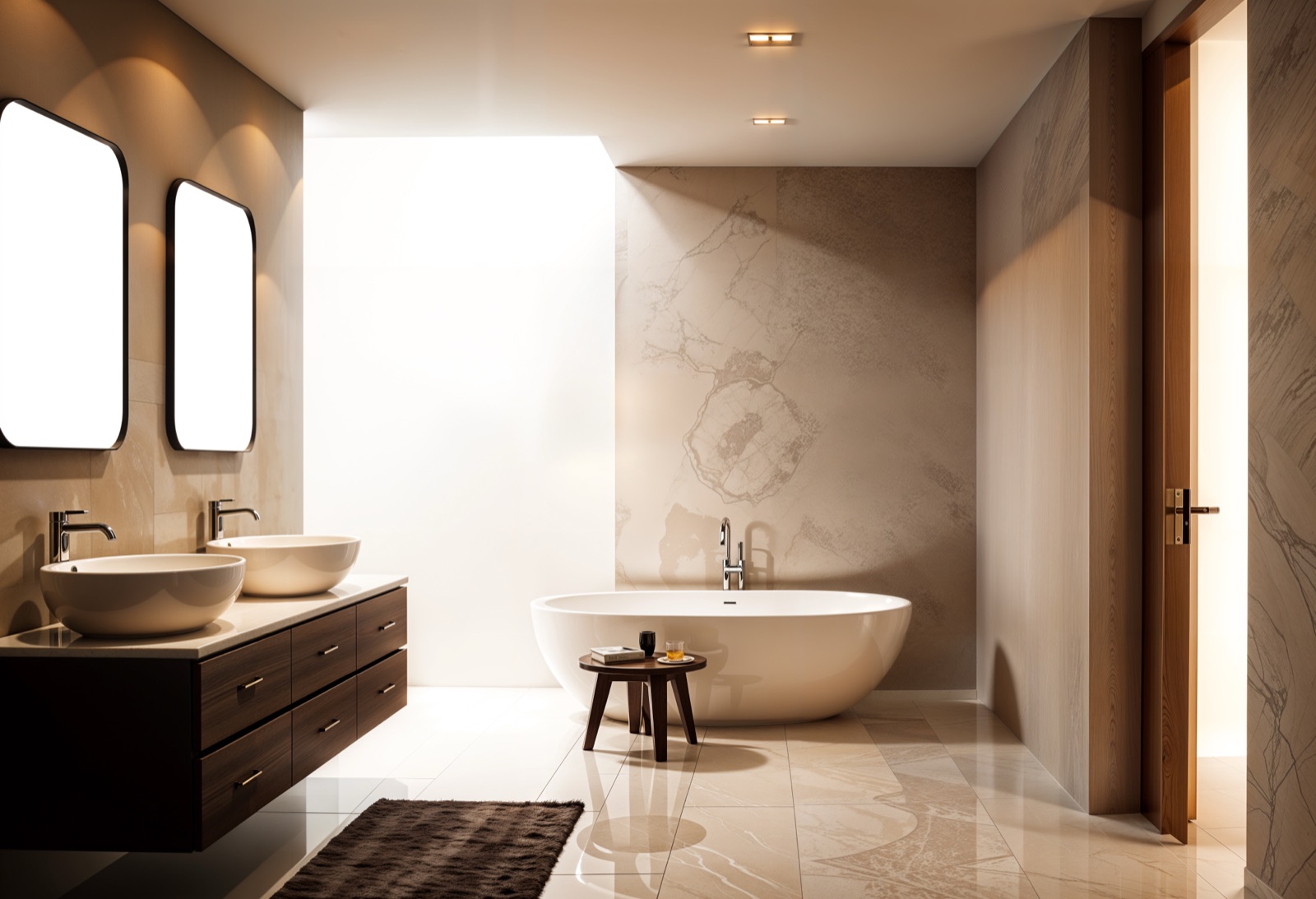
Marble effect porcelain gives the warmth and visual drama of natural stone with the consistency and durability of porcelain. Calacatta, Carrara, travertine, and onyx effects are all available in large format and perform exceptionally well in a drench application.
Natural stone is extraordinary for those who want the genuine material. Natural marble and travertine require careful batch management and sealing, so work with a specialist supplier and a tiler experienced with stone.
Zellige and handmade tiles create a warmer, more organic tile drench aesthetic. They are best suited to smaller spaces such as cloakrooms and shower rooms where the format is proportionate to the room.
Fluted and textured porcelain proves a tile drench does not have to be flat. Vertically laid fluted porcelain tiles create a continuous surface with shadow detail that changes throughout the day.
The Complete Tile Drench Bathroom
Tile drenching done properly is one of the most striking things a bathroom can be. Getting it completely right means choosing the right tile, working with a tiler who understands the precision it requires, and specifying the accessories that preserve the surface rather than compromising it.
Plan the INTEGRA Prima products alongside the tile choice, before the tiler starts, so that when the final tile is laid the wall is exactly what you imagined it would be.
Uninterrupted. Seamless. Complete. Nothing on the surface. Nothing in the way.
About the Author
Amira Sari is Co-Founder of INTEGRA Prima by Tile In Progress. Amira leads brand strategy, marketing, and commercial development for the collection.